Milk Supply Dropped? Here's How to Get It Back.
Your milk supply was doing just fine.
Then you started noticing less milk in your pump bottles.
Maybe your baby is nursing more often, or suddenly seems frustrated at the breast.
And now you're wondering: What happened to my milk supply? And can I get it back?
Should you start eating lactation cookies? Drinking blue Gatorade? Ordering those expensive supplements everyone's talking about?
Probably not.
Luckily, I've got some better ideas.
But first, let's do a little detective work.
Has Your Milk Supply Actually Dropped?
Before you start trying to boost your supply, it's worth figuring out whether there's actually a problem.
Getting less milk when you pump doesn't necessarily mean you're making less milk. Sometimes it's that your milk supply regulated. Or your baby is going through a distracted phase, or has gotten very efficient at nursing.
So before you panic, look at the bigger picture.
If you're unsure whether your baby is getting enough milk, an IBCLC can help you figure that out.

Why Did My Milk Supply Drop?
If your supply really has decreased, the next step is figuring out why.
Here are some possible culprits:
Your period has returned.
You're pregnant again.
You've started hormonal birth control.
You've gone back to work.
You've recently been sick or had mastitis.
Your baby isn't removing milk effectively due to feeding difficulties.
You're pumping more often or have switched pumps.
Your pump's silicone parts are worn out.
Your flange fit isn't quite right (even if it used to be!).
Your baby has started sleeping longer stretches.
Your baby is drinking more milk at daycare and nursing less at home.
Notice anything familiar?
The good news is that many of these situations have solutions.
The key is figuring out what's changed and what you can do about it.
For example:
Started hormonal birth control? Consider a non-hormonal method like condoms or a copper IUD.
Baby sleeping longer? You might consider adding a pumping session if those longer stretches are affecting milk production.
Pumping at work? Take a closer look at your schedule, equipment, and how effectively you're removing milk.
Baby struggling to remove milk? An IBCLC can help assess feeding and develop a plan.
Baby drinking lots of milk at daycare? Talk with caregivers about responsive, paced bottle feeding and appropriate milk volumes.
Sometimes, solving the underlying problem is enough to get things moving in the right direction.
Other times, you'll need to give your milk supply an extra boost.
Let's talk about how to do that.
4 Strategies That Can Help Increase Milk Supply
First, let's get something out of the way.
You do NOT need to spend a fortune on lactation cookies, supplements, or special drinks.
Milk production is driven primarily by how frequently and effectively milk is removed from your breasts. If your supply has dropped, that's usually where we need to focus.
Here are four strategies I use with pumping parents.
1. Get Your Hands Involved
If you've been relying on your pump to do all the work, your hands might be the missing ingredient.
Hands-on pumping combines pumping with breast massage, compression, and hand expression to help you remove milk more effectively.
Try this:
Before pumping: Gently massage and move your breasts around. Give the girls a little shake!
During pumping: Use gentle breast compressions to encourage milk flow. A hands-free pumping bra is especially helpful here.
After pumping: Take the flanges off and do a few minutes of hand expression into the bottles.
These techniques can help improve milk removal, especially when pumping isn't as effective as you'd like.
And better milk removal is what drives better milk production.
2. Hack Your Brain (Yes, Really!)
Here's something that often gets overlooked when we talk about pumping.
Milk removal isn't just about suction.
When you're breastfeeding, your baby's warmth, smell, touch, and sucking patterns all help stimulate the hormones involved in milk release.
Your body is getting lots of signals that it's time to release milk.
But when you're pumping?
You're sitting there with a machine attached to your chest, possibly watching the clock and worrying about how many ounces you're getting.
Not exactly the same experience.
The hormone oxytocin plays an important role in triggering your milk ejection reflex (also called letdown). And stress, discomfort, and distraction can sometimes make that reflex harder to trigger.
So let's help your brain out by making pumping something you actually enjoy.
Listen to a great audiobook or podcast.
Watch your favorite guilty-pleasure show.
Call a friend who makes you laugh.
Cover your pump bottles with baby socks so you're not obsessively watching the ounces.
Look at photos or videos of your baby, or smell a piece of their clothing.
Try humming, swaying, or gently rocking.
Listen to a guided meditation or practice slow breathing.
Create a relaxing environment with soft lighting and your favorite music.
You don't need to do all of these. And there's no single trick that works for everyone.
Experiment until you find something that helps you feel comfortable and relaxed.
Then keep doing it.
Over time, your brain will respond quickly to this stimuli.
3. Experiment With Your Pump Settings
More suction does NOT automatically mean more milk.
In fact, turning up the vacuum until you're gritting your teeth can make pumping uncomfortable and less effective.
The goal is to find the combination of speed, rhythm, and suction that helps your body release milk comfortably.
Here's what I suggest:
Start with a stimulation pattern that helps trigger your letdown. Once milk is flowing, experiment with the expression settings to see what works best.
And don't be afraid to change things up during a session.
If milk flow slows down, you can:
Switch back to stimulation mode to encourage another letdown.
Adjust the suction or speed.
Pause and gently massage your breasts.
Remove the flanges and try some hand expression.
Your pump isn't necessarily a "set it and forget it" device.
A little experimentation can make a big difference.
4. Check Your Flange Fit (Again!)
You've heard me say this before, and you'll hear me say it again.
Flange fit matters.
A poorly fitting flange can make pumping uncomfortable and interfere with effective milk removal.
And here's something many parents don't realize: your flange size can change throughout lactation.
So even if you were measured months ago, it's worth checking again.
When you’ve got the right fit:
Pumping feels suuuuuppppeeerrrr comfy.
Milk is released soon after you start and it flows quickly.
Not sure whether your flanges fit correctly?
I've created a free Flange Fitting Guide that walks you through how to measure, what to order, and how to tell whether you've got the right fit.
Need a Plan? Introducing The Milk Supply Reset
Recovering from a supply dip can feel overwhelming.
You're trying to figure out what went wrong, which strategies to try, and how to fit everything into your already busy day.
And meanwhile, you're worrying about whether you'll make enough milk tomorrow.
I created The Milk Supply Reset to take some of that guesswork off your plate.
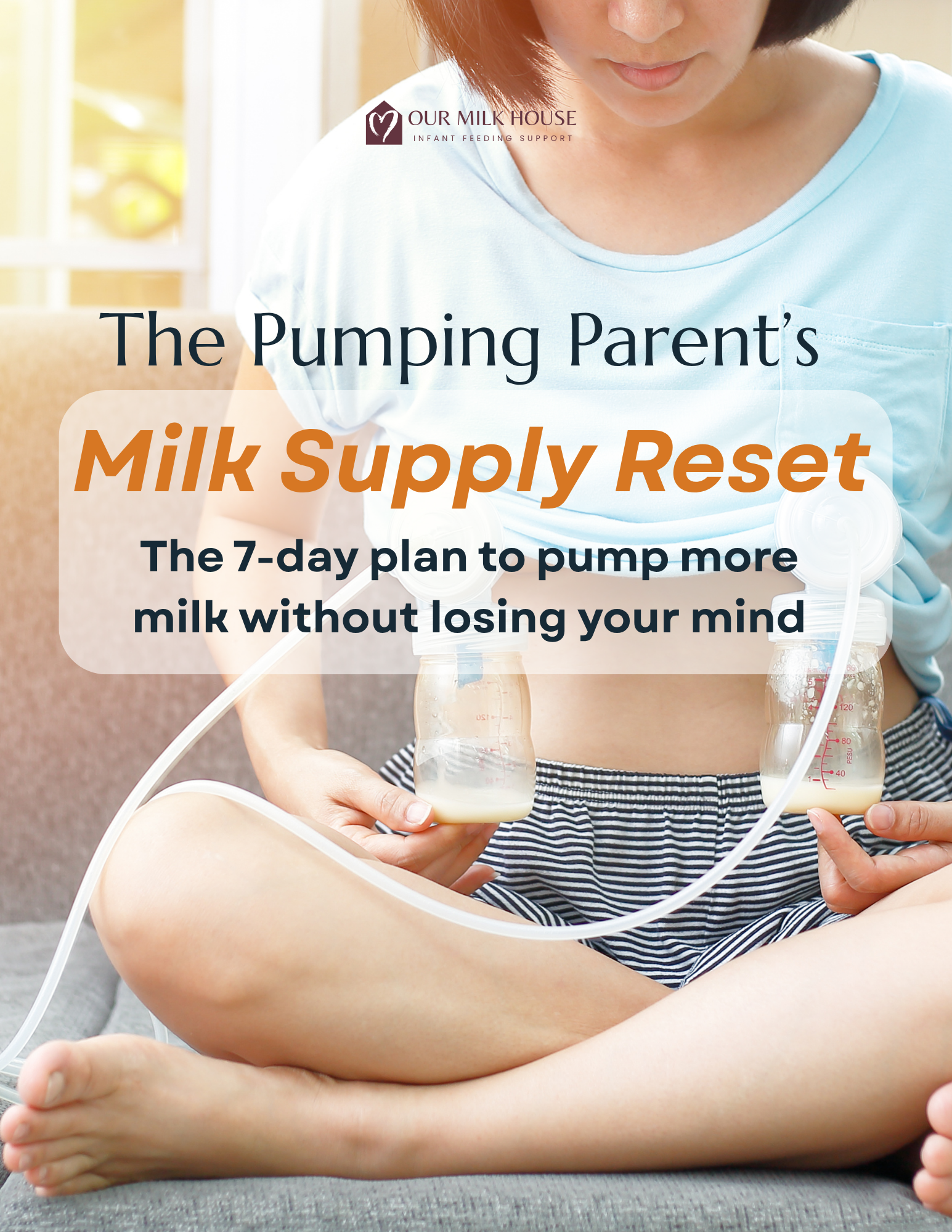
It's a simple, 7-day email program designed to help you take a more strategic approach to regaining your milk supply.
Here's how it works:
Every day for seven days, you'll receive an email from me with a short video walking you through a few areas to focus on.
You'll get practical strategies, clear next steps, and plenty of encouragement along the way.
No complicated routines. No expensive supplements. No chasing every new milk supply hack on social media.
Just a realistic approach to understanding your supply and making changes that can help.
Because you don't need more things to worry about.
You need a plan.
Ready to get started?